

Why Hair Loss in Cancer Treatment?
Hair loss during cancer treatment usually happens because chemotherapy drugs target rapidly growing cells, including hair follicles. This can lead to temporary hair thinning or complete hair loss in some patients. In most cases, hair starts growing back after treatment ends, although texture and color may temporarily change.
Facing a cancer diagnosis is challenging enough, but the prospect of losing your hair can feel like losing a part of your identity. As a physician, I have sat with many patients who expressed that hair loss was the side effect they feared most—more than the fatigue or the nausea.
I want you to know that your feelings are valid. It is okay to feel upset about hair fall. This guide is designed to help you understand the science behind why this happens, how to cope with the change, and why there is always hope for your hair to return.
📑 Table of Contents
- Why Does Cancer Treatment Cause Hair Loss?
- Which Cancer Treatments Cause Hair Loss?
- When Does Hair Loss Usually Start During Chemotherapy?
- Types of Cancer Treatment and Hair Loss Risk (Comparison)
- Does Hair Grow Back After Cancer Treatment?
- Emotional Impact of Hair Loss During Cancer Treatment
- Tips to Manage Hair Loss During Cancer Treatment
- Can Hair Loss During Chemotherapy Be Prevented?
- When Should Patients Talk to Their Oncologist?
- Hope Beyond Hair Loss — Recovery After Cancer Treatment
- Frequently Asked Questions
Why Does Cancer Treatment Cause Hair Loss?
To understand why hair falls out, we first have to understand how chemotherapy works. Chemotherapy is designed to kill cancer cells, which are characterized by their ability to divide and grow very rapidly.
However, chemotherapy drugs are not always able to distinguish between “bad” cancer cells and “good” healthy cells that also grow quickly. Some of the fastest-growing cells in the human body are found in your hair follicles.
When chemotherapy enters your system, it attacks these healthy hair follicle cells alongside the cancer. This disrupts the hair’s growth cycle, causing the hair shaft to weaken and eventually fall out from the root.
It is important to remember that this damage is almost always temporary. While the drugs are active in your body, the follicles go into a “resting phase,” but they retain the ability to heal once the treatment is complete.
As the Best Cancer specialist in Lucknow, I often remind my patients that hair loss is actually a sign that the medication is doing its job—it is circulating through your body to find and eliminate fast-growing cells.
Which Cancer Treatments Cause Hair Loss?
Not every cancer treatment causes hair loss. The extent of hair fall depends entirely on the type of medication, the dosage, and the method of delivery.
Chemotherapy
This is the most common cause of hair loss. Some drugs cause total hair loss on the head, as well as eyebrows, eyelashes, and body hair. Others may only cause mild thinning.
Radiation Therapy
Unlike chemotherapy, which affects the whole body, radiation only causes hair loss on the specific part of the body being treated. If you have radiation on your head, you will likely lose hair there. If radiation is aimed at your chest, you will not lose the hair on your head.
Targeted Therapy
These drugs are designed to attack specific markers on cancer cells. While they don’t usually cause complete baldness, they can make hair become very thin, dry, curly, or brittle.
Immunotherapy
Immunotherapy uses your immune system to fight cancer. Hair loss is less common here, but it can occur in small patches (similar to alopecia areata) as the immune system becomes overactive.
When Does Hair Loss Usually Start During Chemotherapy?
Hair loss does not happen immediately after the first needle enters your arm. It is usually a gradual process that begins about two to three weeks after your first treatment session.
At first, you might notice that your scalp feels extra sensitive or tender. You may find more hair than usual on your pillow in the morning or in the drain after a shower.
For some, the hair comes out in clumps. For others, it is a slow thinning that becomes noticeable over several weeks. By the time you reach your second or third cycle of chemotherapy, the hair loss is usually at its peak.
I recommend that patients prepare for this window of time. Knowing when to expect it can help you feel more in control of a situation that often feels out of your hands.
Types of Cancer Treatment and Hair Loss Risk
| Treatment Type | Hair Loss Risk | Hair Usually Grows Back? |
| Chemotherapy | High (Varies by drug) | Yes, almost always |
| Radiation Therapy | Only in the treated area | Often, but may be permanent at high doses |
| Targeted Therapy | Mild to Moderate | Yes |
| Immunotherapy | Low / Rare | Yes |
Note: Individual experiences vary. Your oncologist will discuss the specific risks associated with your prescribed regimen.
Does Hair Grow Back After Cancer Treatment?
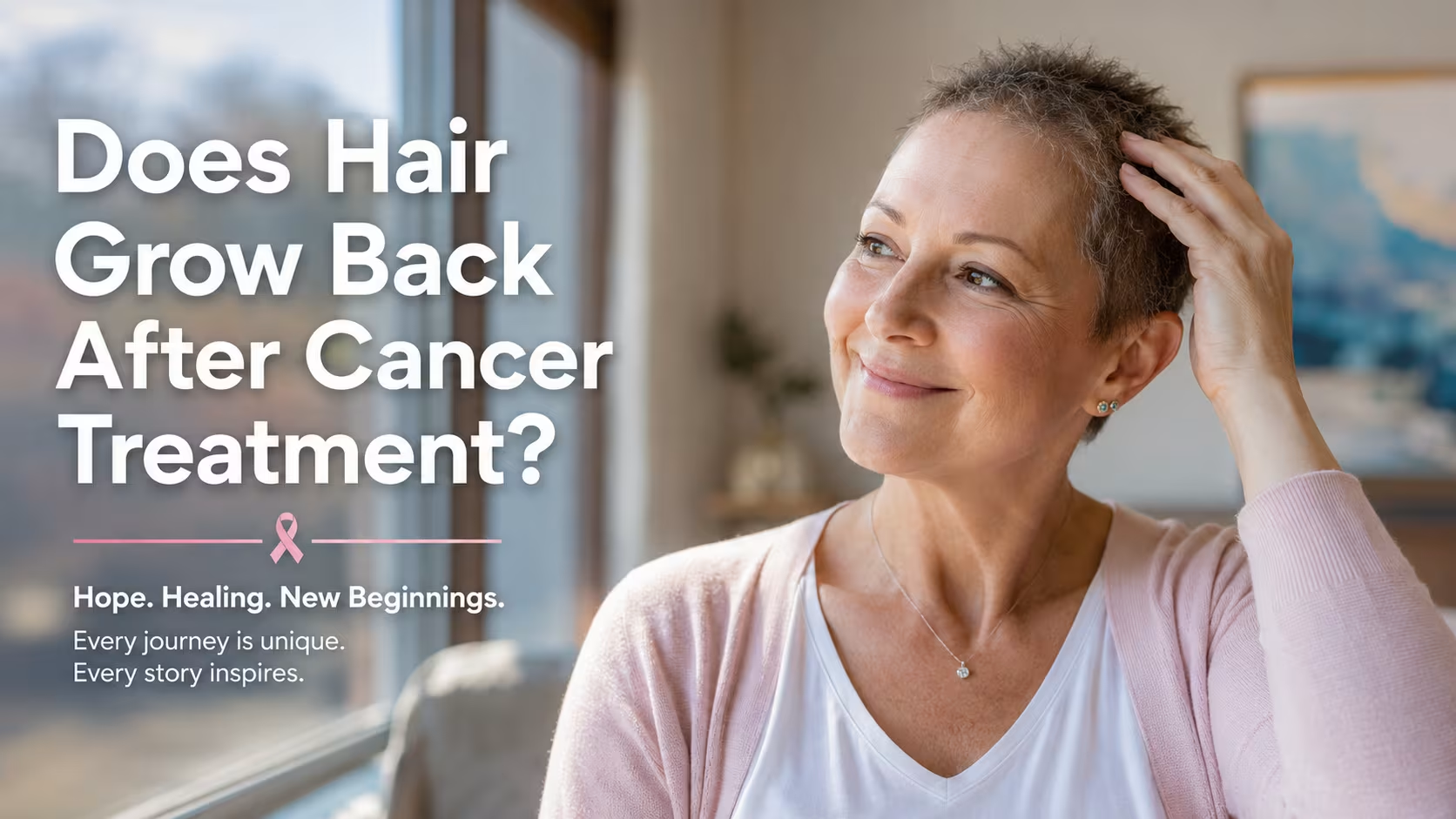
The short answer is: Yes. For the vast majority of patients, hair regrowth is a certainty, not a possibility.
Your hair follicles are incredibly resilient. Once the chemotherapy drugs have cleared your system, the follicles begin to repair themselves. You will likely see “fuzz” or fine hair appearing about three to six weeks after your last treatment.
The Regrowth Timeline:
- 3-4 weeks post-chemo: Fine, soft fuzz begins to appear.
- 1-2 months post-chemo: Real hair begins to grow at its normal rate.
- 3-6 months post-chemo: You may have an inch or two of hair.
- 1 year post-chemo: Your hair may be long enough to brush or style.
Patients treated under the guidance of Dr. Harshvardhan Atreya, a trusted Best Oncologist in Lucknow, are often counseled about treatment-related hair changes before therapy begins. We emphasize that while your “new” hair might initially have a different texture (often called “chemo curls”) or a slightly different color, it usually returns to its original state within a year.
Emotional Impact of Hair Loss During Cancer Treatment
As a doctor, I see the physical side effects, but I also see the emotional ones. Hair is often tied to our sense of self, our gender identity, and our privacy. Losing it can feel like the world finally “sees” that you are sick, even if you weren’t ready to share that news.
It is common to experience:
- Anxiety: Worrying about how others will look at you.
- Grief: Mourning the loss of your “old self.”
- Loss of Control: Feeling that the disease is taking away your choices.
Please know that it is okay to cry. It is okay to be frustrated. I encourage my patients to lean on support groups and family. Your strength is not measured by your hair; it is measured by the courage you show every day you show up for treatment.
Tips to Manage Hair Loss During Cancer Treatment
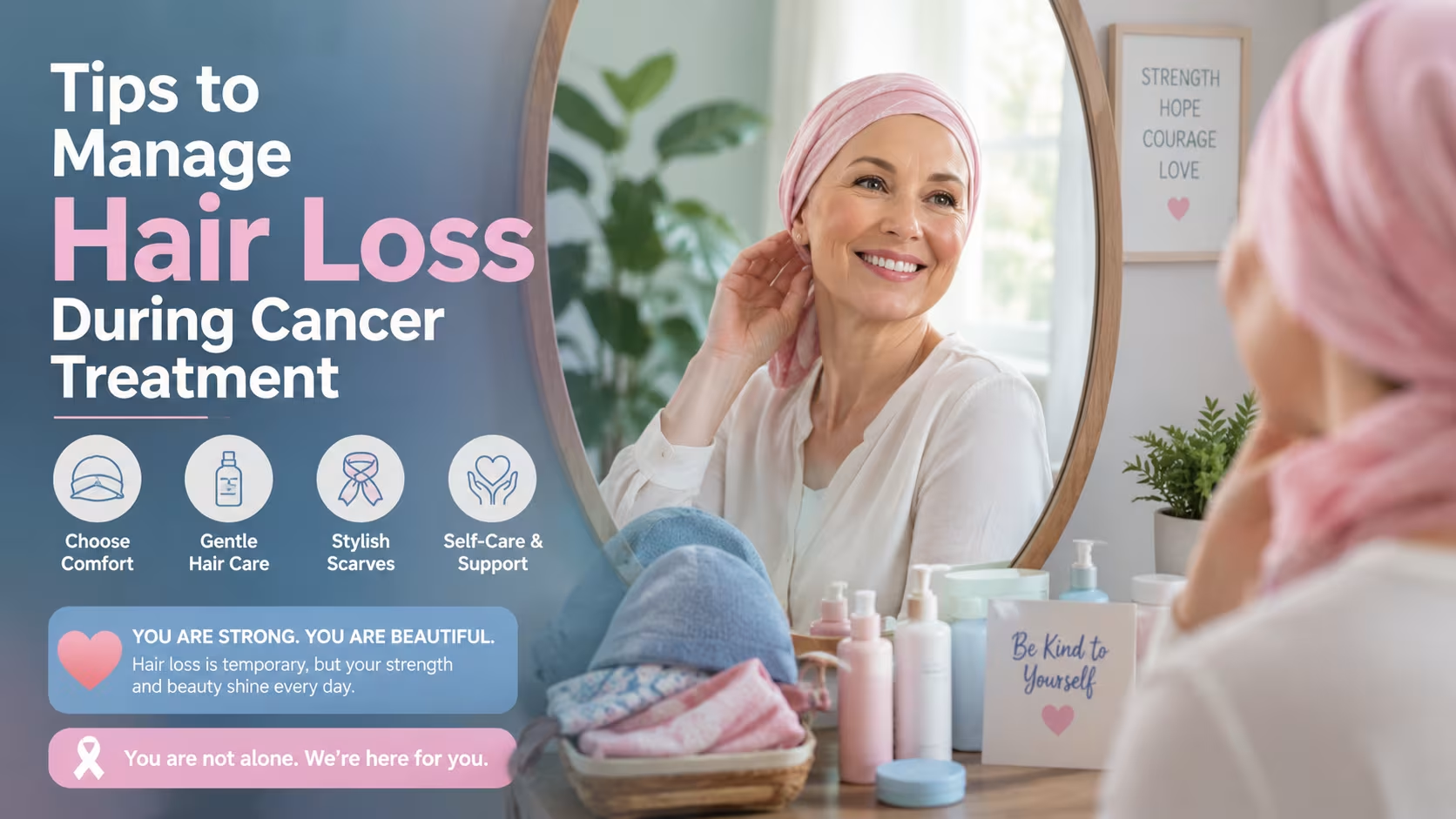
While we cannot always stop the hair from falling out, we can manage the process with dignity and comfort.
- Be Gentle: Use a soft-bristle baby brush and a mild, fragrance-free shampoo. Avoid scrubbing the scalp.
- Skip the Heat: Put away the hair dryers, flat irons, and curling rods. Heat weakens the hair shaft further.
- Consider a Short Cut: Many patients find that cutting their hair short before it starts falling out makes the transition easier. It can also make the hair look thicker for a longer period.
- Satin Pillowcases: Satin or silk creates less friction than cotton, which can prevent the hair from tangling and pulling during the night.
- Scalp Care: If your scalp feels itchy or tender, use a moisturizing oil or lotion recommended by your oncology team.
- Head Coverings: Whether you choose a wig, a scarf, a turban, or a bold bald look, do what makes you feel most “you.”
Can Hair Loss During Chemotherapy Be Prevented?
One of the most frequent questions I receive as a Best Cancer specialist in Lucknow is whether hair loss can be stopped entirely.
The most common method currently available is Scalp Cooling (Cold Caps). This involves wearing a specialized cap that is cooled to sub-freezing temperatures before, during, and after chemotherapy.
How it works: The cold constricts the blood vessels in the scalp, which reduces the amount of chemotherapy drug that reaches the hair follicles.
Is it effective? It works for some patients, but not all. It depends on the type of chemotherapy being used. It can also be uncomfortable and expensive. It is important to have an honest conversation with your oncologist about whether scalp cooling is a viable option for your specific treatment plan.
When Should Patients Talk to Their Oncologist About Hair Loss?
While hair loss is expected, some situations require medical attention:
- Scalp Irritation: If you notice severe redness, crusting, or open sores on your scalp.
- Intense Pain: If the scalp tenderness becomes unbearable.
- Severe Distress: If the emotional weight of hair loss is making you consider stopping your life-saving treatment.
- No Regrowth: If you see no signs of hair regrowth six months after finishing treatment.
As your medical team, we are here to support your physical health and your mental well-being. Never feel that your concerns about hair are “vain” or “unimportant.”
Hope Beyond Hair Loss — Recovery After Cancer Treatment
I want to share a story about a patient of mine named Maya (name changed for privacy). Maya was devastated when she lost her long, dark hair. She felt she had lost her beauty.
However, during her recovery, she began to notice a soft, silver-toned fuzz growing back. Within six months, she had a thick head of curls—hair she had never had before! She realized that her new hair was a badge of her survival.
Your hair will return, and when it does, it will be a symbol of the storm you have weathered. The journey of cancer treatment is long, but hair loss is just one chapter.
Your resilience is what defines you, not the hair on your head.
Frequently Asked Questions (FAQs)
Q1. Why does chemotherapy cause hair loss?
Chemotherapy targets all rapidly dividing cells in the body. Since hair follicle cells grow very quickly, the drugs inadvertently attack them, causing hair to thin or fall out.
Q2. Does hair always fall out during cancer treatment?
No. Many modern targeted therapies and lower-dose chemotherapy regimens cause very little hair loss. It depends entirely on the specific drugs you are receiving.
Q3. When does hair loss start after chemotherapy?
Typically, hair begins to thin or fall out 14 to 21 days after the first treatment cycle.
Q4. Does hair grow back after chemo?
Yes, in nearly all cases, hair begins to grow back once the drugs are no longer in your system. This usually starts within a few weeks of your final session.
Q5. Can chemotherapy hair loss be prevented?
Scalp cooling or “cold caps” can reduce hair loss for some patients, though they are not 100% effective for everyone.
Q6. Which cancer treatment causes the most hair loss?
Traditional intravenous chemotherapy (such as those used for breast, lung, or ovarian cancer) typically causes the most significant hair loss.
Q7. Is hair loss during cancer treatment permanent?
It is very rarely permanent. In the vast majority of cases, the follicles remain alive and begin producing hair again after treatment.
Q8. How can patients manage hair loss emotionally?
Connecting with support groups, talking to a counselor, and experimenting with scarves or wigs can help. Remember that your value is not tied to your appearance.
Q9. Can hair texture change after chemotherapy?
Yes. It is very common for hair to grow back with a different texture (e.g., “chemo curls”) or a different color. It usually settles back to its original state after a year.
Q10. What are the best ways to care for the scalp during treatment?
Use gentle, moisturizing, fragrance-free products. Protect your scalp from the sun with hats or SPF, as the skin can become very sensitive.
A Message of Support from Dr. Harshvardhan Atreya
Hair loss during cancer treatment can be emotionally difficult, but it is often temporary and part of the healing journey. With proper medical guidance, emotional support, and modern cancer care, patients can navigate treatment with greater confidence and hope.
As an oncologist, my goal is not just to treat the disease, but to care for the person. We will walk through every stage of this journey together—from the first day of treatment to the day you see your hair beginning to grow back.
Consult Dr. Harshvardhan Atreya, a trusted Best Cancer specialist in Lucknow, for compassionate cancer care and personalized treatment guidance.
Disclaimer: This article is for educational purposes and does not replace professional medical advice. Always consult with your oncologist regarding your specific condition.