





Introduction
In our fast-paced modern world, “acidity” has become a household term. From a spicy dinner to a stressful day at work, most people have experienced that uncomfortable burning sensation in the chest or throat. Because it is so common, we often treat it with a quick over-the-counter antacid and move on with our lives. However, what if that persistent burning is not just a temporary inconvenience? What if your body is trying to signal a more profound transformation happening within your food pipe?
Medical science has established a clear and concerning link between chronic acidity, professionally known as Gastroesophageal Reflux Disease (GERD), and the development of esophageal cancer. While not every case of acidity leads to cancer, ignoring the symptoms for years can allow the disease to progress silently.
Understanding the transition from a simple digestive issue to a life-threatening condition is the first step in prevention. This article explores the biology of acid reflux, the warning signs of cellular changes, and why consulting an expert like Dr. Harshvardhan Atreya, a leading Best Cancer Specialist in Lucknow, is vital for those suffering from long-term digestive distress.
Featured Snippet:Chronic acid reflux (GERD) can damage the lining of the esophagus over time. In some cases, long-standing GERD may increase the risk of Barrett’s esophagus and esophageal cancer, making early diagnosis and expert medical treatment critically important.
What Is GERD (Gastroesophageal Reflux Disease)?
To understand the risk of cancer, we must first understand the baseline condition: GERD. At the bottom of your esophagus—the tube that connects your mouth to your stomach—there is a ring of muscle called the Lower Esophageal Sphincter (LES). Think of this as a one-way valve. It opens to let food into the stomach and then clamps shut to keep stomach contents where they belong.
Acid reflux occurs when this valve becomes weak or relaxes inappropriately. When this happens, the highly acidic contents of your stomach splash back up into the esophagus. Because the lining of the esophagus is delicate and not designed to handle the corrosive nature of stomach acid, it becomes irritated and inflamed.
While most people experience occasional acid reflux, GERD is the chronic, more severe form of this condition. It is typically diagnosed when reflux occurs more than twice a week or causes significant damage to the esophageal lining.
What Is Esophageal Cancer?
Esophageal cancer is a disease where malignant (cancer) cells form in the tissues of the esophagus. The esophagus is made of several layers, including the mucosa (inner lining), submucosa, and a thick layer of muscle. Cancer usually starts in the innermost lining and grows outward through the other layers.
There are two main types of esophageal cancer, and they affect different populations:
- Adenocarcinoma: This type usually develops in the lower part of the esophagus, near the stomach. It is the type most closely linked to chronic acidity, GERD, and obesity.
- Squamous Cell Carcinoma: This type usually affects the upper and middle parts of the esophagus. It is more frequently associated with lifestyle factors like heavy smoking and high alcohol consumption.
The danger of esophageal cancer lies in its “silent” nature. In the early stages, there may be no pain or noticeable changes, which is why awareness of the connection between acidity and cancer is so important.

How Are GERD and Esophageal Cancer Connected?
The bridge between acidity and cancer is built on chronic inflammation. Our stomach is lined with specialized cells that produce and survive in acid. The esophagus, however, is lined with “squamous cells,” which are similar to the cells on your skin—they are great for protection against friction but terrible at handling acid.
When you have GERD, your esophagus is essentially suffering from “chemical burns” several times a week. The body is incredible at healing itself, but when the injury is constant, the healing process goes haywire.
- Repeated Injury: Acid eats away at the squamous cells.
- Chronic Inflammation: The tissue becomes permanently red and swollen.
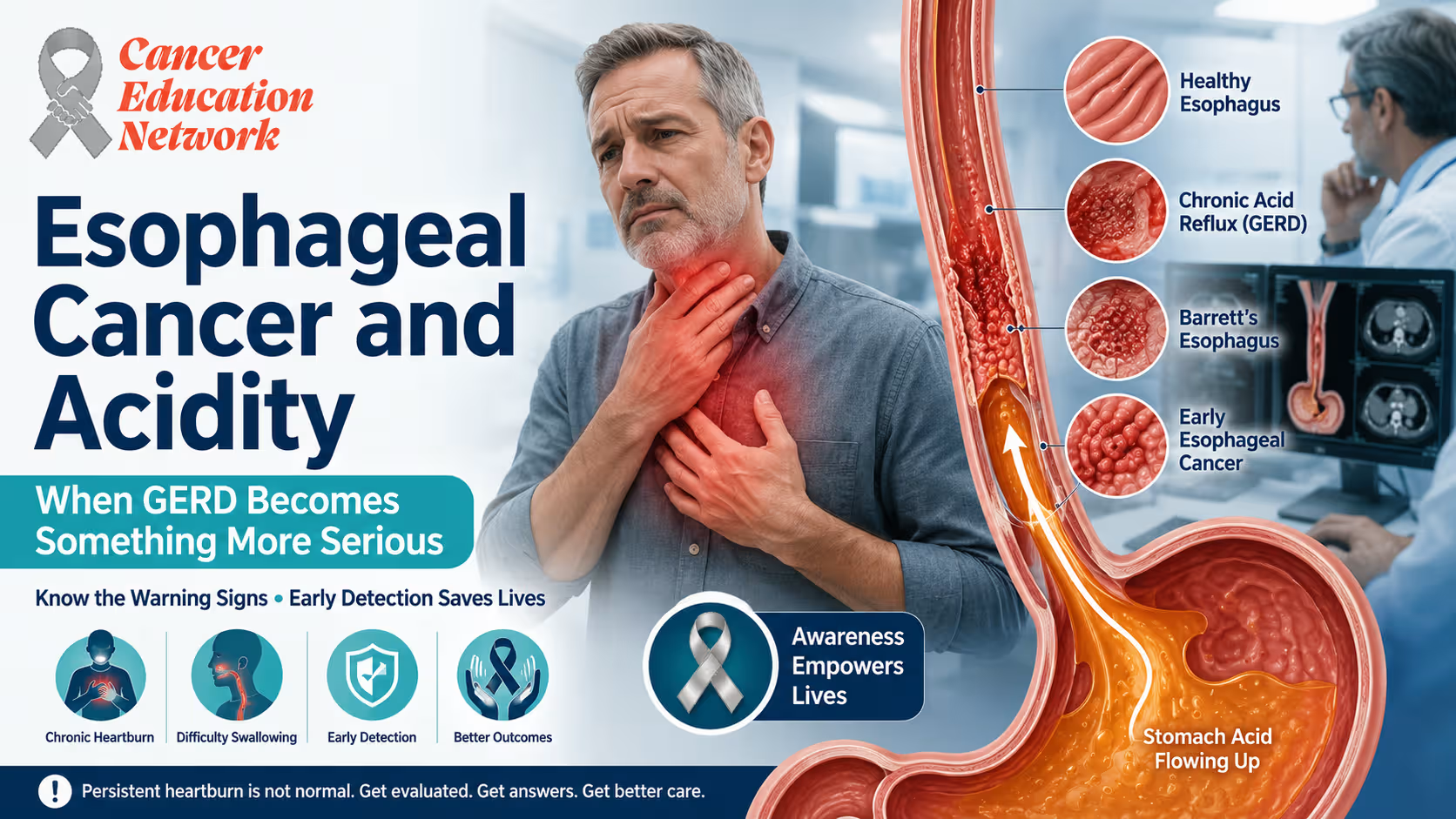
- Metaplasia: In an attempt to protect itself, the body starts replacing the damaged squamous cells with tougher, gland-like cells that look like the lining of the intestine.
- Genetic Mutations: During this rapid cell turnover, mistakes (mutations) can occur in the DNA, leading to uncontrolled cell growth—otherwise known as cancer.
Barrett’s Esophagus – The Important Warning Sign
Barrett’s esophagus is the “pre-cancerous” bridge mentioned above. It is a condition where the normal lining of the esophagus has been replaced by tissue that is similar to the intestinal lining.
It is estimated that about 10% to 15% of people with chronic GERD develop Barrett’s esophagus. The most significant concern is that Barrett’s esophagus itself doesn’t cause unique symptoms; you only feel the GERD that caused it.
Why Surveillance Matters:
If you are diagnosed with Barrett’s esophagus, you aren’t guaranteed to get cancer, but your risk increases significantly. This is why doctors perform regular endoscopies to look for “dysplasia”—a term for cells that look abnormal under a microscope but aren’t quite cancer yet. Catching the disease at the dysplasia stage allows for treatments that can prevent cancer from ever forming.
Symptoms of GERD That Should Never Be Ignored
Many people think acidity is just a “burning chest.” In reality, GERD can present in several ways that affect your quality of life:
- Frequent Heartburn: A burning sensation that moves from your stomach to your chest or throat, especially after eating or when lying down.
- Regurgitation: A sour or bitter-tasting acid backing up into your throat or mouth.
- Chest Pain: Sometimes so severe that it is mistaken for a heart attack.
- Chronic Cough: Acid can be “micro-aspirated” into the lungs, causing a dry, persistent cough that doesn’t respond to cold medicine.
- Hoarseness: If the acid reaches the vocal cords, it can cause your voice to sound raspy or weak.
- Sore Throat: A constant feeling of “rawness” in the throat.
If you find yourself using antacids every day for these symptoms, it is no longer “just acidity”—it is a medical condition that needs professional evaluation.
Warning Signs That Acidity May Be Something More Serious
How do you know when the line has been crossed from GERD to something more dangerous? There are “Red Flag” symptoms that indicate the esophagus may be narrowing due to a tumor or that the cancer has begun to affect your systemic health.
1. Difficulty Swallowing (Dysphagia)
This is the most common sign of esophageal cancer. At first, you might feel like bread or meat gets “stuck” in your chest. As the tumor grows and narrows the food pipe, even soft foods and eventually liquids become difficult to swallow.
2. Unexplained Weight Loss
If you are losing weight without trying, it is a major warning sign. This happens both because swallowing becomes difficult and because cancer consumes the body’s energy.
3. Persistent Chest Pain or Pressure
Unlike the sharp burn of heartburn, this pain is often a dull, deep ache in the center of the chest that doesn’t go away after taking an antacid.
4. Food Getting Stuck (Impacted)
A terrifying experience where food simply will not go down, often leading to vomiting or intense pressure.
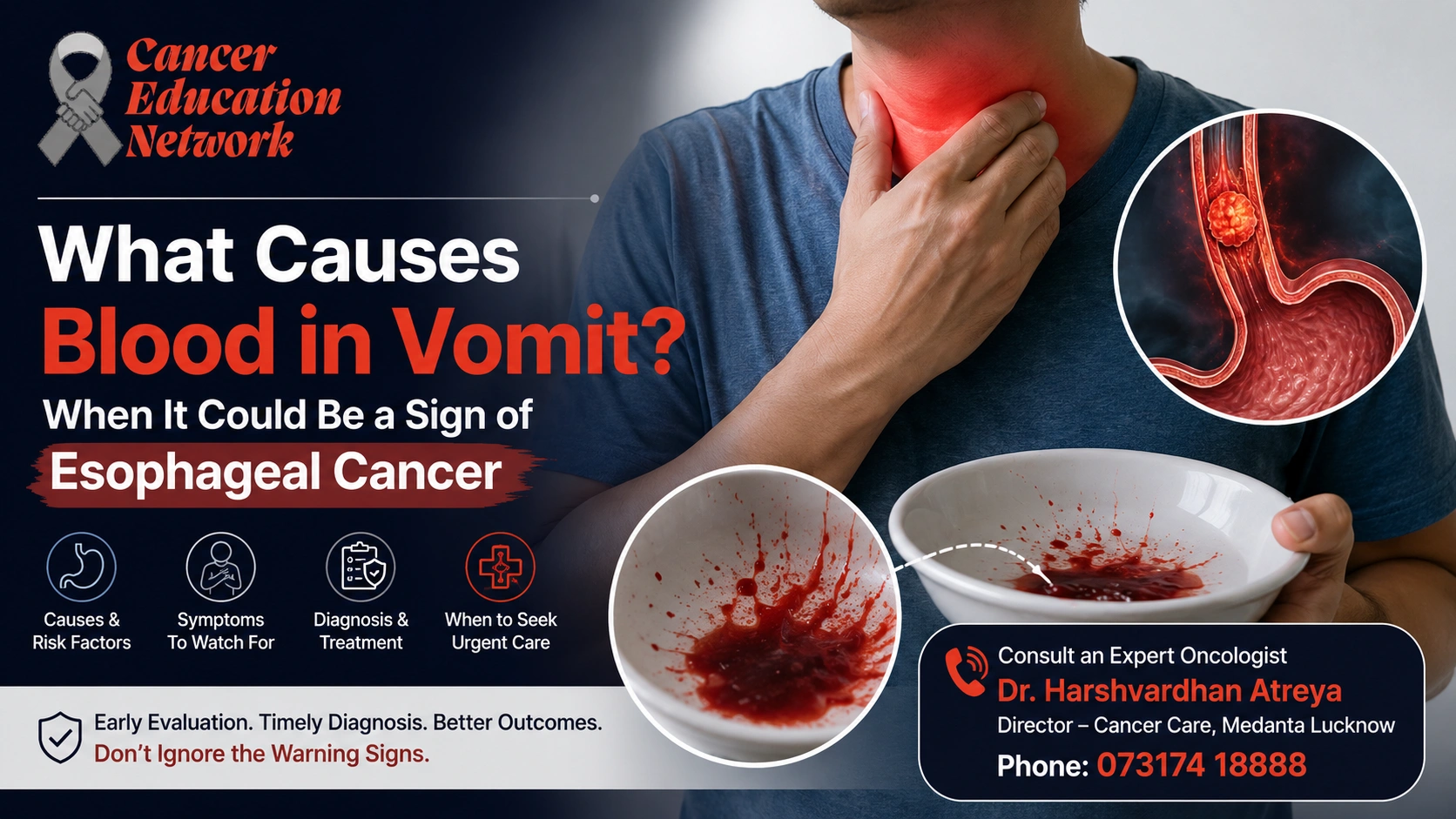
5. Vomiting Blood or Black Stools
Tumors can bleed. If the blood is fresh, it may appear in vomit. If it is digested, it makes the stool look black and tarry.
6. Persistent Hiccups or Coughing
If a tumor irritates the diaphragm or the nerves leading to the lungs, it can cause uncontrollable hiccups or a cough that brings up blood.
If you experience any of these, you should immediately consult a specialist. Early intervention by the Best Oncologist in Lucknow can be the difference between a manageable condition and an advanced illness.
Who Is Most at Risk for Esophageal Cancer?
While anyone can develop esophageal cancer, certain factors create a “perfect storm” for the disease:
- Gender: Men are significantly more likely to develop esophageal adenocarcinoma than women.
- Age: It is most commonly diagnosed in people over age 55, though cases in younger adults are rising due to the obesity epidemic.
- Obesity: Carrying excess weight, particularly around the abdomen, increases pressure on the stomach and forces acid into the esophagus.
- Tobacco and Alcohol: These act as irritants that weaken the esophageal lining and damage DNA.
- Diet: Diets low in fruits and vegetables and high in processed meats have been linked to higher risks.
- Bile Reflux: Sometimes, it’s not just acid; bile from the liver can also reflux, causing even more severe damage.
- Family History: If a close relative had esophageal or stomach cancer, your risk may be higher.
Stages of Progression – From Acid Reflux to Cancer
Understanding the timeline of this disease helps emphasize the importance of early check-ups. It rarely happens overnight.
- Stage 1: Occasional Acid Reflux: You have heartburn once or twice a month. No permanent damage is done yet.
- Stage 2: Chronic GERD: You have symptoms multiple times a week. The lining of the esophagus stays red and inflamed (Esophagitis).
- Stage 3: Barrett’s Esophagus: The cells change to survive the acid. This is the “precancerous” phase. You may still only feel heartburn.
- Stage 4: Low-Grade to High-Grade Dysplasia: The Barrett’s cells start looking very abnormal and begin dividing rapidly.
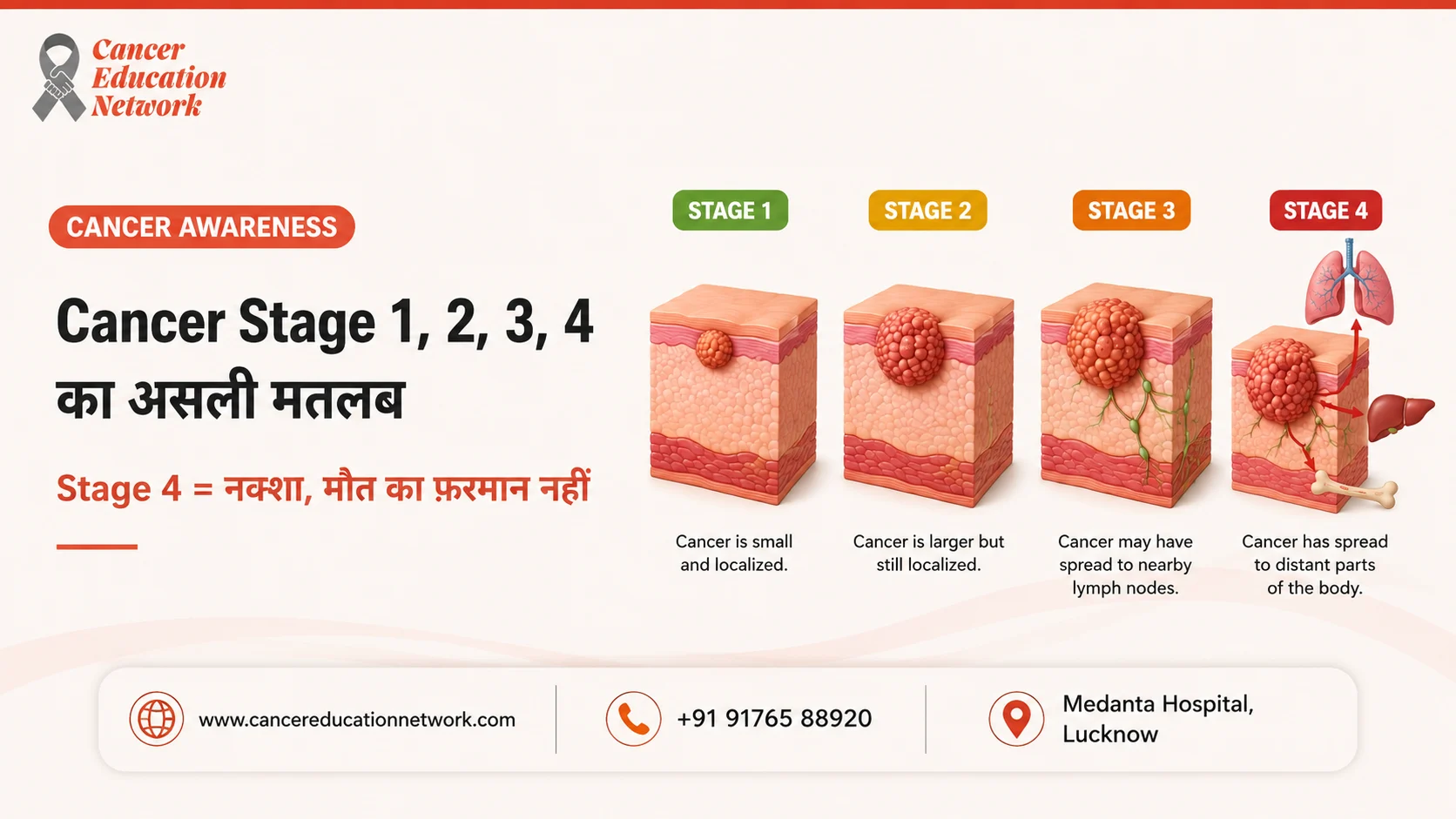
- Stage 5: Esophageal Cancer: A mass or tumor forms. It can now spread to the lymph nodes and other organs.
By consulting an expert like Dr. Harshvardhan Atreya, patients can be intercepted at Stages 2 or 3, preventing the progression to Stage 5.

GERD vs Esophageal Cancer: A Side-by-Side Comparison
| Feature | GERD (Acidity) | Esophageal Cancer |
| Primary Symptom | Heartburn and sour taste | Difficulty swallowing (Dysphagia) |
| Pain Level | Burning sensation; comes and goes | Persistent, deep chest ache |
| Weight Change | Usually stable | Rapid, unexplained weight loss |
| Response to Antacids | Symptoms improve quickly | Little to no relief |
| Swallowing | Usually normal | Feels like food is “stuck” in the chest |
| Duration | Can be lifelong and stable | Symptoms get worse over weeks/months |
Note: GERD is a risk factor for cancer, but they are distinct conditions. The transition from one to the other is marked by the “Red Flag” symptoms listed above.
How Doctors Diagnose Esophageal Cancer
If you visit a specialist for persistent acidity or swallowing issues, they will use a combination of technology and pathology to see what is happening inside.
Upper GI Endoscopy
This is the most critical test. A thin, flexible tube with a camera is passed down the throat while the patient is sedated. It allows the doctor to see the lining of the esophagus clearly.
Biopsy
During the endoscopy, if the doctor sees any suspicious tissue or signs of Barrett’s esophagus, they will take a tiny sample (biopsy) to be examined under a microscope. This is the only way to definitively diagnose cancer.
Endoscopic Ultrasound (EUS)
A specialized ultrasound probe is used during an endoscopy to see how deep a tumor has grown into the wall of the esophagus. This is vital for “staging” the cancer.
CT and PET Scans
These imaging tests help the doctor see the “big picture.” They check if the cancer has spread to the lungs, liver, or lymph nodes.
Treatment Options for Esophageal Cancer
Treatment has evolved significantly in the last decade. Today, a “multidisciplinary approach”—where different types of specialists work together—is the standard of care.
Surgery (Esophagectomy)
For early-stage cancer that hasn’t spread, surgery is often the primary treatment. The surgeon removes the diseased part of the esophagus and reconstructs the food pipe using a portion of the stomach or intestine.
Radiation Therapy
High-energy X-rays are used to kill cancer cells or shrink a tumor before surgery. It is often combined with chemotherapy (chemoradiation).
Chemotherapy
Powerful drugs travel through the bloodstream to kill cancer cells throughout the body. This is crucial for stopping the spread of the disease.
Targeted Therapy
Some esophageal cancers have specific proteins that help them grow. Targeted drugs can “find” these proteins and shut them down without harming healthy cells.
Immunotherapy
This is one of the most exciting fields in oncology. It involves using drugs that help your own immune system recognize and attack cancer cells.
Dr. Harshvardhan Atreya, as the Best Cancer Specialist in Lucknow, utilizes these advanced modalities to create a customized plan for each patient, focusing on both survival and quality of life.
Can Esophageal Cancer Be Prevented?
Prevention is about breaking the cycle of inflammation.
- Aggressive GERD Management: Don’t just mask the pain. Use medications (like PPIs) as directed and follow up with a gastroenterologist.
- Dietary Adjustments: Avoid “triggers” like caffeine, chocolate, spicy foods, and late-night meals.
- Elevate the Head of the Bed: Use a wedge pillow to keep acid in your stomach while you sleep.
- Weight Control: Even losing 5-10% of body weight can significantly reduce acid reflux.
- Quit Smoking: Smoking doubles the risk of esophageal cancer.
- Screening: If you are a male over 50 with chronic GERD, ask your doctor about a screening endoscopy.
When Should You Consult a Specialist?
You should not wait for “unbearable pain” to see a doctor. Preventive oncology is about catching changes before they become symptomatic.
Naturally, you should seek a consultation with Dr. Harshvardhan Atreya if:
- Your acidity symptoms persist despite taking over-the-counter medicine for more than two weeks.
- You have a family history of GI cancers.
- You have been told you have Barrett’s esophagus.
- You find yourself coughing or choking during meals.
As the Best Cancer Specialist in Lucknow, Dr. Atreya provides the expertise needed to navigate the complex relationship between digestive health and oncology.
Common Myths and Facts About GERD and Esophageal Cancer
Myth 1: Acidity is just a lifestyle problem.
Fact: While lifestyle affects it, GERD is a medical condition involving the failure of a physical valve (the LES).
Myth 2: If I don’t feel pain, I don’t have cancer.
Fact: Early esophageal cancer and Barrett’s esophagus are often completely painless.
Myth 3: Drinking milk cures acidity and prevents cancer.
Fact: Milk may provide temporary relief by coating the esophagus, but it does not stop the underlying reflux or the cellular damage.
Myth 4: Only “heavy” people get GERD and esophageal cancer.
Fact: While obesity is a major risk factor, thin individuals with a weak LES or genetic predispositions can also develop the disease.
Myth 5: Esophageal cancer is a “death sentence.”
Fact: With modern treatments and early detection (especially at the Barrett’s or Dysplasia stage), the prognosis is better than ever before.

Final Thoughts
The most important takeaway is this: Acidity is common, but chronic GERD is a condition that requires respect and attention. You do not have to live in fear of cancer, but you should live with awareness.
By managing your reflux, maintaining a healthy lifestyle, and seeking expert medical advice when “red flags” appear, you can protect your esophagus and your overall health. Remember, early diagnosis is not just about finding cancer—it’s about finding a way to prevent it.
FAQs
1. Can acidity cause esophageal cancer?
Yes. Chronic acidity (GERD) causes long-term inflammation, which can lead to Barrett’s esophagus, a known precursor to adenocarcinoma.
2. Does GERD always lead to cancer?
No. Most people with GERD will never develop cancer. However, those with long-term, untreated GERD are at a higher risk than the general population.
3. What are the early signs of esophageal cancer?
Early signs are often subtle but include difficulty swallowing solid foods, persistent indigestion, and a feeling of pressure in the chest.
4. What is Barrett’s esophagus?
It is a condition where the lining of the esophagus changes to look like the lining of the intestine due to chronic acid damage.
5. How long does it take GERD to turn into cancer?
It typically takes many years or even decades of chronic reflux to cause the cellular mutations that lead to cancer.
6. Can esophageal cancer be cured if detected early?
Yes. Early-stage esophageal cancer can often be treated successfully through surgery or endoscopic procedures.
7. When should I worry about acid reflux?
You should be concerned if your reflux occurs more than twice a week, requires daily medication, or is accompanied by swallowing issues or weight loss.
8. Is difficulty swallowing always a sign of cancer?
No. It can be caused by inflammation, an infection, or a narrowing (stricture). However, it is a symptom that always requires a doctor’s visit.
9. How is esophageal cancer diagnosed?
The primary method is an Upper GI Endoscopy where a biopsy is taken from the esophageal lining.
10. When should I see a cancer specialist?
You should see a specialist like Dr. Harshvardhan Atreya if you have “red flag” symptoms or if a biopsy shows Barrett’s esophagus with dysplasia.
Persistent acidity should never be ignored, especially when symptoms become frequent, severe, or are accompanied by swallowing difficulties and unexplained weight loss. Early diagnosis can make a significant difference in treatment outcomes.
For expert evaluation, cancer screening, and personalized treatment guidance, consult Dr. Harshvardhan Atreya, recognized by many patients as a Best Cancer Specialist in Lucknow. Take the first step toward your health today.