







Cancer treatment is a journey that requires not only emotional and physical resilience but also meticulous financial planning. Among the various treatment modalities, radiation therapy (radiotherapy) stands as a cornerstone of modern oncology, used in approximately 50% to 60% of all cancer cases. As we look toward 2026, the landscape of radiation oncology in India is evolving rapidly. While the introduction of high-precision technologies has improved survival rates and quality of life, it has also sparked questions regarding the “Radiation Therapy Cost in India.”
Understanding these costs is vital for patients and their families to make informed decisions without the added burden of “financial toxicity.” This guide provides a comprehensive breakdown of the expected pricing, technological variations, and factors that influence the total expenditure of radiotherapy in India for 2026.
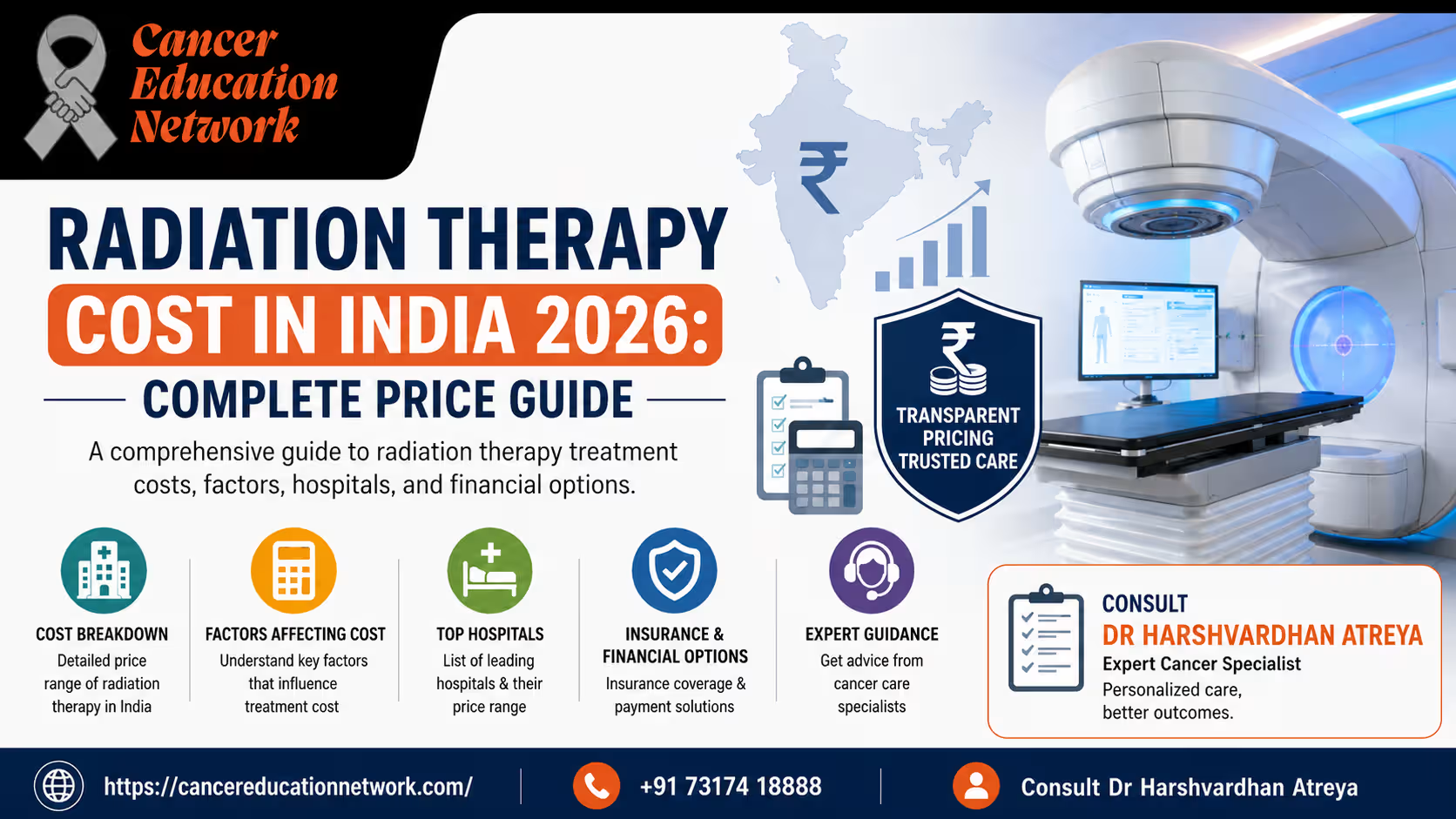
Radiation Therapy Cost in India in 2026 generally ranges from ₹1,50,000 to ₹6,00,000 (USD 1,800 to 7,200). The final price depends on the technology used (IMRT, IGRT, or SBRT), the number of sessions, the hospital’s location, and the specific type and stage of cancer.
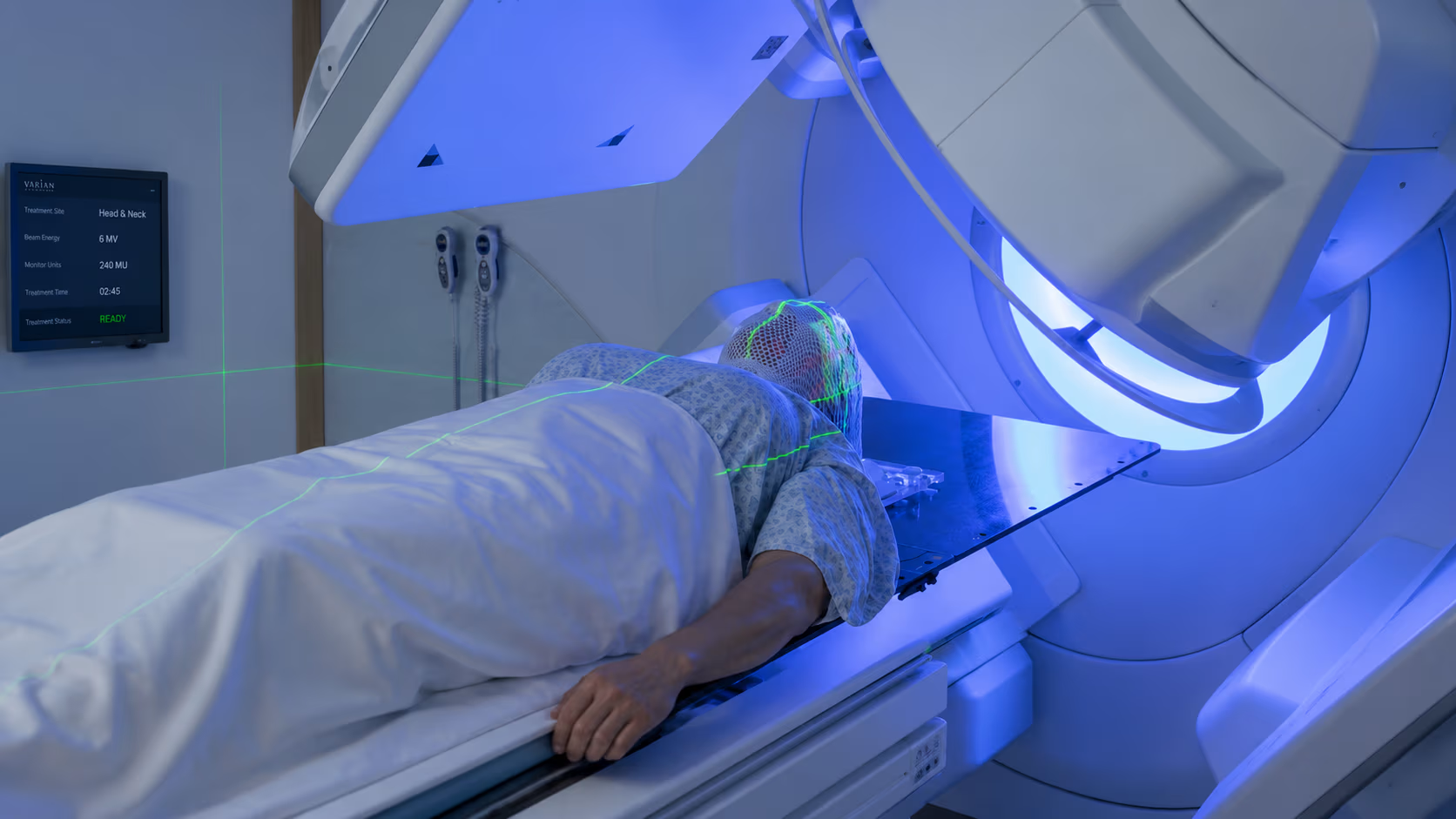
Quick Facts: Radiation Therapy at a Glance
For those looking for immediate figures, here is a summary of the expected radiation therapy landscape in India for 2026.
| Feature | Details |
| Average Treatment Cost Range | ₹1,50,000 – ₹6,00,000 |
| Common Technologies | 3D-CRT, IMRT, IGRT, VMAT, SRS, SBRT |
| Typical Treatment Duration | 1 to 7 weeks |
| Average Number of Sessions | 5 to 35 sessions (depending on the case) |
| Insurance Coverage | Usually covered under most comprehensive plans |
| Success Rates | High (especially for localized tumors) |
| Recovery Period | Immediate (non-invasive), but side effects may linger |
What Is Radiation Therapy?
Radiation therapy is a clinical specialty that uses high doses of ionizing radiation—such as X-rays, gamma rays, or protons—to destroy cancer cells and shrink tumors. Unlike chemotherapy, which travels through the entire bloodstream, radiation is typically a localized treatment, meaning it affects only the part of the body where the cancer is located.
How Radiation Therapy Works
Cancer cells divide and grow much faster than normal cells. Radiation works by damaging the DNA within these malignant cells. When their DNA is damaged beyond repair, the cells stop dividing and eventually die. The body then naturally breaks down and removes these dead cells.
Why Radiation Is Used to Treat Cancer
Radiation therapy serves several strategic purposes in an oncology plan:
- Curative Treatment: The primary goal is to eliminate the tumor entirely and cure the patient.
- Adjuvant Treatment: Used after surgery or chemotherapy to kill any remaining microscopic cancer cells.
- Neoadjuvant Treatment: Given before surgery to shrink a large tumor, making it easier for surgeons to remove.
- Palliative Treatment: When a cure is not possible, radiation is used to reduce pain, stop bleeding, or relieve pressure on organs, significantly improving the patient’s quality of life.
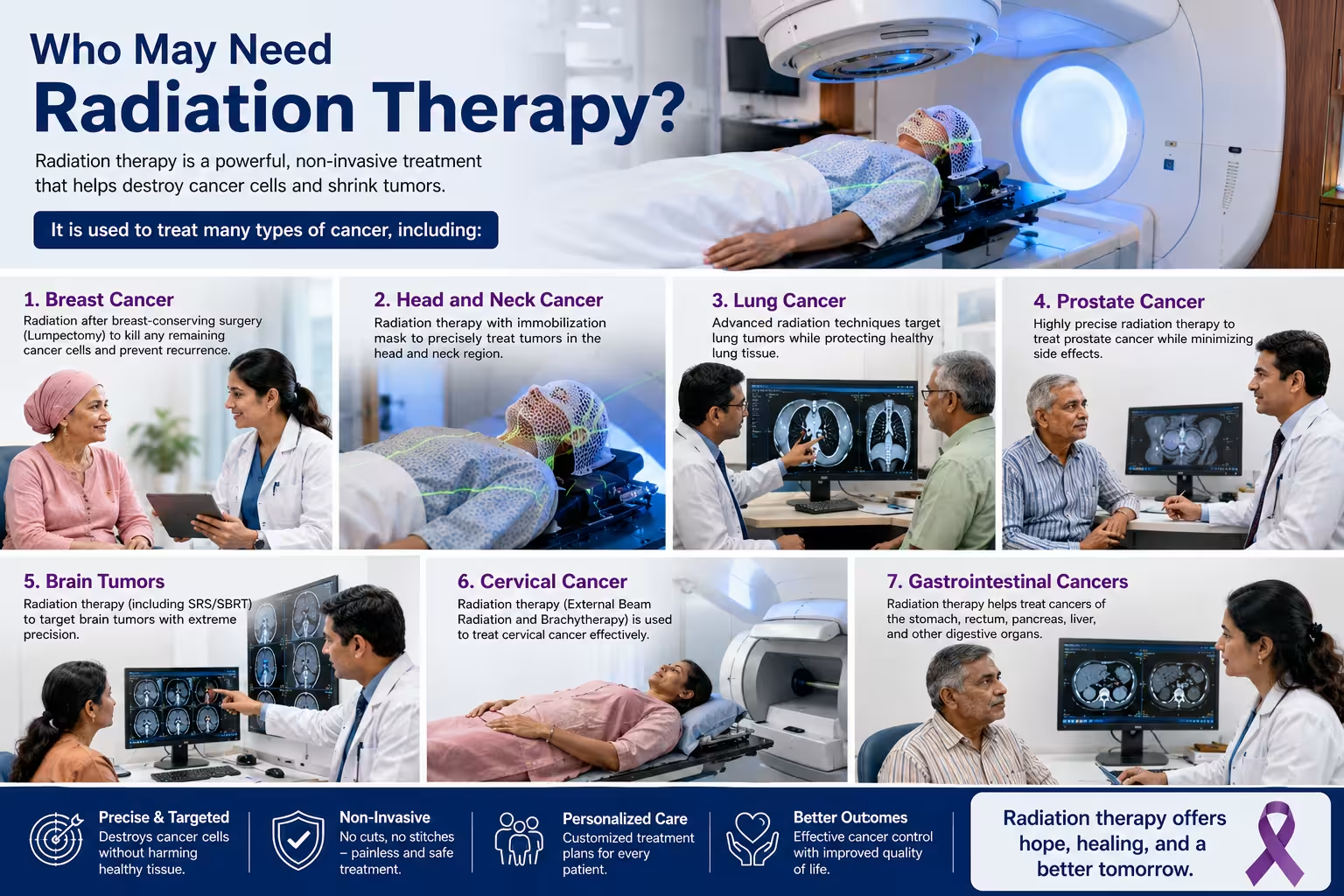
Who May Need Radiation Therapy?
Radiation therapy is incredibly versatile. In 2026, it remains a primary treatment for several common and rare cancers:
- Breast Cancer: Often used after a lumpectomy to prevent recurrence.
- Head and Neck Cancer: Frequent use of IMRT to spare salivary glands and the spinal cord.
- Lung Cancer: Used for both small-cell and non-small-cell lung cancers, often via SBRT.
- Prostate Cancer: A highly effective alternative to surgery.
- Brain Tumors: Precision radiation like Gamma Knife or SRS is standard for localized tumors.
- Cervical Cancer: Often involves a combination of external beam radiation and brachytherapy.
- Gastrointestinal Cancers: Effective for esophageal, rectal, and pancreatic cancers.
Radiation Therapy Cost in India: 2026 Overview
India has emerged as a global hub for affordable, high-quality cancer care. By 2026, while medical inflation continues to rise globally, India remains significantly more cost-effective than the US, UK, or UAE.
Average Cost Range Across India
The total cost for a full course of radiation therapy in India generally falls between ₹1.5 Lakhs and ₹6 Lakhs.
- Government/Charitable Hospitals: ₹50,000 – ₹1,50,000 (often subsidized).
- Private Multi-Specialty Hospitals: ₹2,50,000 – ₹6,00,000.
Why Costs Differ Between Hospitals
- Infrastructure: Hospitals with the latest Varian or Elekta machines (like TrueBeam or Halcyon) charge a premium for the precision they offer.
- Location: Hospitals in Metro cities (Delhi, Mumbai, Bangalore) have higher overheads compared to Tier-2 cities.
- Accreditation: JCI and NABH-accredited hospitals often have higher pricing due to strict quality and safety protocols.
Metro Cities vs. Tier-2 Cities (Estimated 2026 Pricing)
| City Category | Average Cost Range |
| Tier 1 (Mumbai, Delhi, Bangalore, Chennai) | ₹3,00,000 – ₹6,50,000 |
| Tier 2 (Pune, Ahmedabad, Hyderabad, Kolkata) | ₹2,00,000 – ₹4,50,000 |
| Tier 3 (Lucknow, Jaipur, Indore) | ₹1,50,000 – ₹3,50,000 |
Factors That Affect Radiation Therapy Cost
The “sticker price” of radiation therapy is rarely a single number. Several variables influence the final invoice:
- Type and Stage of Cancer: Complex tumors near vital organs require more planning and precision, increasing the cost.
- Radiation Technology Used: There is a significant price gap between basic 2D radiation and advanced VMAT or Proton therapy.
- Number of Fractions (Sessions): Some treatments require 30 sessions (standard fractionation), while newer “hypofractionated” protocols achieve the same result in 5 sessions. While the cost per session is higher for 5 sessions, the total cost might be comparable or slightly lower.
- Treatment Planning: The use of sophisticated software for dose calculation and “contouring” (mapping the tumor) adds to the pre-treatment cost.
- Radiation Oncologist Expertise: Highly experienced senior consultants may charge higher professional fees.
- Additional Investigations: PET-CT scans, MRI-fusions, and regular blood tests during the course of treatment contribute to the total.
Types of Radiation Therapy and Their Costs (2026 Estimates)
The technology chosen is the biggest driver of the Radiation Therapy Cost in India.
1. Conventional Radiation (2D/3D-CRT)
- How It Works: Uses 2D images or 3D models to aim radiation beams. It is the older standard but still effective for certain areas.
- Estimated Cost: ₹1,00,000 – ₹1,80,000.
2. IMRT (Intensity-Modulated Radiation Therapy)
- How It Works: This technology allows the doctor to modulate the intensity of each beam, sparing healthy tissue.
- Estimated Cost: ₹2,50,000 – ₹3,50,000.
3. IGRT (Image-Guided Radiation Therapy)
- How It Works: Incorporates daily imaging (like a mini-CT scan) before every session to ensure the tumor hasn’t shifted due to breathing or organ movement.
- Estimated Cost: ₹3,50,000 – ₹4,50,000.
4. VMAT (Volumetric Modulated Arc Therapy)
- How It Works: The machine rotates 360 degrees around the patient, delivering the dose in a continuous arc. It is extremely fast (sessions take only 2-5 minutes).
- Estimated Cost: ₹4,00,000 – ₹5,50,000.
5. SRS / SBRT (Stereotactic Radiosurgery / Body Radiation)
- How It Works: Delivers a massive, highly precise dose to a small tumor in just 1 to 5 sessions. It is often called “knifeless surgery.”
- Estimated Cost: ₹3,00,000 – ₹5,00,000.
Technology Comparison Chart
| Technology | Precision Level | Sessions | Estimated Total Cost (INR) |
| 3D-CRT | Moderate | 25-35 | ₹1.2L – ₹1.8L |
| IMRT | High | 25-35 | ₹2.5L – ₹3.5L |
| IGRT | Very High | 25-35 | ₹3.5L – ₹4.5L |
| VMAT | Ultra High | 20-30 | ₹4L – ₹5.5L |
| SBRT | Extreme | 1-5 | ₹3L – ₹5L |
Radiation Therapy Cost by Cancer Type
The anatomical location of the cancer dictates the complexity of the radiation plan.
- Breast Cancer Radiation Cost: Typically ranges from ₹2,00,000 to ₹3,50,000. If DIBH (Deep Inspiration Breath Hold) technology is used to protect the heart, costs may be slightly higher.
- Head and Neck Cancer Radiation Cost: Usually requires IMRT/IGRT to protect the spinal cord and salivary glands. Estimated cost: ₹3,00,000 – ₹4,50,000.
- Prostate Cancer Radiation Cost: Often involves SBRT or long-course IGRT. Cost: ₹3,50,000 – ₹5,50,000.
- Brain Tumor Radiation Cost: SRS (Stereotactic Radiosurgery) is common. Cost: ₹2,50,000 – ₹4,00,000.
- Cervical Cancer Radiation Cost: Involves External Beam Radiation followed by Brachytherapy. Total cost: ₹2,00,000 – ₹3,50,000.
Step-by-Step Radiation Therapy Process
To understand why the costs accumulate, it is helpful to look at the patient journey.
- Step 1: Oncology Consultation: The initial meeting where the doctor reviews history and reports.
- Step 2: Diagnostic Evaluation: Updated PET-CT or MRI scans to pinpoint the tumor’s current status.
- Step 3: CT Simulation: The patient is placed in the exact treatment position, and a “mold” or “mask” is created. A CT scan is taken to map the area.
- Step 4: Treatment Planning: Physics experts and oncologists use AI-driven software to calculate the exact dosage and beam angles. This takes 2-3 days.
- Step 5: Radiation Sessions: The actual delivery of treatment. This can range from a single day to 7 weeks of daily visits (Monday to Friday).
- Step 6: Follow-Up Monitoring: Regular check-ups after the course is finished to manage side effects and monitor tumor response.
Additional Expenses Patients Should Consider
When budgeting for “Radiation Therapy Cost in India,” don’t forget the hidden or auxiliary costs:
- Diagnostic Imaging: PET-CT scans can cost ₹15,000 – ₹25,000 per scan.
- Hospital Stays: Most radiation is outpatient (no overnight stay), but if the patient is weak, room charges may apply.
- Supportive Care: Medications for nausea, skin creams for radiation dermatitis, and nutritional supplements.
- Travel and Accommodation: For patients traveling from rural areas or from abroad to metro cities, lodging for 5-6 weeks can be a major expense.
| Expense Type | Estimated Cost (INR) |
| Initial PET-CT Scan | ₹15,000 – ₹25,000 |
| Mould/Mask Charges | ₹5,000 – ₹15,000 |
| Weekly Doctor Review | ₹1,000 – ₹3,000 per week |
| Medications (Supportive) | ₹10,000 – ₹30,000 (Total) |
Does More Expensive Radiation Therapy Mean Better Results?
A common question is: “Should I choose the most expensive option?”
In radiation oncology, higher cost usually translates to Precision. Advanced technologies like VMAT or IGRT allow the doctor to:
- Deliver higher doses to the tumor (increasing the kill rate).
- Deliver lower doses to the surrounding healthy organs (reducing side effects).
For example, in Head and Neck cancer, IMRT is significantly better than 3D-CRT because it prevents permanent dry mouth (xerostomia). However, for some palliative cases where the goal is simply to reduce bone pain, a less expensive conventional technique may be perfectly adequate. The most expensive treatment isn’t always the “best”—the best treatment is the one that fits your specific clinical diagnosis.
Common Side Effects of Radiation Therapy
While modern radiation is very safe, it does have side effects. These are usually localized to the area being treated:
- Fatigue: The most common side effect; the body uses energy to repair healthy cells.
- Skin Changes: Redness, itching, or peeling (similar to a sunburn) in the treatment area.
- Hair Loss: Only occurs in the area receiving radiation (e.g., the head).
- Difficulty Swallowing: Common in esophageal or head and neck treatments.
- Digestive Issues: Diarrhea or nausea if the abdomen or pelvis is treated.
Note: Most side effects are temporary and subside within a few weeks of finishing treatment.
Why Early Treatment Can Reduce Overall Costs
Delaying cancer treatment often leads to the disease progressing to a more advanced stage. From a financial perspective, early treatment is always more “economical”:
- Lower Intensity: Early-stage tumors may require fewer sessions.
- Avoidance of Complications: Advanced tumors can cause organ failure or emergencies, leading to expensive ICU stays.
- Higher Cure Rates: Treating a localized tumor is more cost-effective than managing a metastatic (Stage IV) disease over several years.
Conclusion
The Radiation Therapy Cost in India in 2026 is a reflection of the nation’s growing technological prowess and its commitment to making healthcare accessible. While the costs can range from ₹1.5 Lakhs to ₹6 Lakhs, the availability of insurance, government schemes (like Ayushman Bharat), and a variety of technology options means that quality care is within reach for most.
When planning your treatment:
- Ask for a detailed “Cost Estimate” from the hospital.
- Check if your insurance covers “Modern Radiation Planning.”
- Discuss the technology options with your oncologist—ask why a specific technique is being recommended over another.
Choosing the right center involves balancing technology, the oncologist’s expertise, and your financial comfort.
FAQs
1. What is the average Radiation Therapy Cost in India in 2026?
The average cost is between ₹1,50,000 and ₹6,00,000, depending on the complexity and technology.
2. Is radiation therapy covered by health insurance?
Yes, most comprehensive health insurance plans and corporate policies in India cover radiotherapy. It is often treated as a “daycare procedure.”
3. How many radiation sessions are usually required?
It varies. SBRT may take only 1-5 sessions, while standard curative radiation for breast or prostate cancer may take 25-35 sessions.
4. Is radiation therapy painful?
No, the treatment itself is painless, much like getting an X-ray. You do not feel the radiation as it enters the body.
5. What is the difference between IMRT and IGRT?
IMRT modulates the intensity of the beam to shape it around the tumor. IGRT adds “vision” (imaging) to the process, ensuring the beams are perfectly aligned even if the patient breathes or moves.
6. Can radiation therapy cure cancer?
Yes, for many localized cancers (like early-stage prostate, head and neck, or skin cancer), radiation therapy can be the primary and only treatment needed for a cure.
CTA
Take the First Step Toward Recovery
Radiation therapy is a powerful tool in the fight against cancer. If you or a loved one has been diagnosed, don’t let the fear of costs delay your care. Consult with a qualified Radiation Oncologist today to receive a personalized treatment plan and a clear financial roadmap.
Disclaimer: The costs mentioned are estimates based on 2026 projections and may vary based on individual hospital policies and patient conditions.