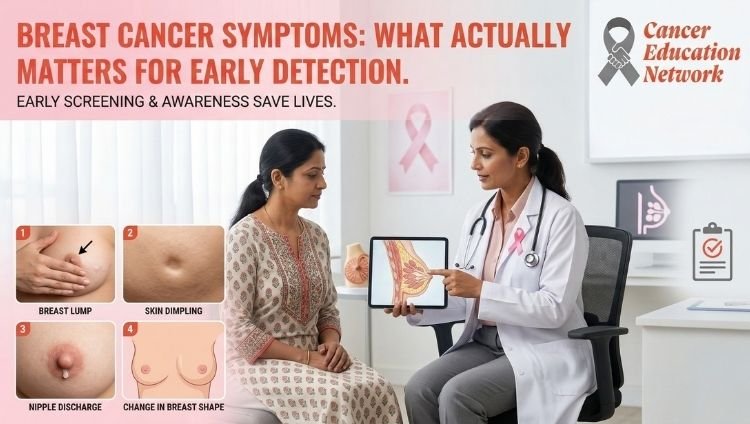
Every few seconds, a woman somewhere in the world is diagnosed with breast cancer. In many cases, the diagnosis comes months after the first warning sign appears—not because the symptom was absent, but because it was ignored, misinterpreted, or assumed to be harmless. After managing numerous breast cancer cases, one clear pattern emerges: the time between first symptom and confirmed diagnosis often directly impacts survival and treatment complexity. This is not another routine checklist. It reflects what actually happens in clinical practice, which symptoms truly deserve attention, and why early evaluation by an experienced oncologist in Lucknow for timely breast Cancer Treatment in Lucknow can significantly influence outcomes.
Understanding Breast Cancer: Beyond the Basic Definition
Breast cancer isn't a single disease—it's a collection of distinct conditions that behave differently, spread differently, and respond to treatment differently. Understanding these distinctions explains why symptoms vary so dramatically between patients.
Primary Types and Their Behavior
Breast cancer originates when abnormal cells in breast tissue grow uncontrollably. But where it starts and how it spreads changes everything. Ductal carcinoma begins in milk ducts and represents nearly 80% of cases. Lobular carcinoma starts in milk-producing glands and accounts for about 10–15% of cases.
These two types have different growth patterns, different symptoms, and different detection challenges, which is why diagnosis and screening strategies can vary between patients.
The Molecular Subtypes Matter Even More Than Location
- Hormone receptor-positive (HR+) cancers grow in response to estrogen or progesterone.
- HER2-positive cancers have excess HER2 protein that drives aggressive tumor growth.
- Triple-negative breast cancer (TNBC) lacks all three receptors and often grows faster than other types.
- Inflammatory breast cancer (IBC) is one of the most aggressive forms and blocks lymph vessels in the breast skin.
Each subtype presents differently. HR+ tumors tend to grow slowly and may be felt as a distinct lump. Triple-negative cancers can grow rapidly and may not form a clear lump during early stages.
Inflammatory breast cancer is especially challenging because it rarely presents as a lump. Instead, it causes skin changes such as redness, swelling, or warmth that can resemble an infection.
What This Means for Symptoms
You cannot rely only on finding a “typical” lump. Different breast cancer types produce different warning signs and progress at different speeds. This is why comprehensive breast awareness—understanding all possible changes in breast appearance, texture, or sensation—is more important than checking only for lumps.
The Real Symptom Timeline: Three Detection Windows
Breast Cancer Detection Timeline
WINDOW 1: Microscopic Changes (0–6 months)
No symptoms | Detectable only by mammogram
↓
WINDOW 2: Early Physical Changes (6–18 months)
Subtle tissue changes | Possible small lump
Texture differences | Minor asymmetry
[Optimal detection window – Best outcomes]
↓
WINDOW 3: Obvious Symptoms (18+ months)
Clear mass | Skin changes | Nipple discharge
Visible deformity | Lymph node swelling
[Most diagnoses happen here – Advanced stage likely]
Window 1: The Silent Phase
During this phase, cancer cells multiply but haven't formed a detectable mass. This is why mammography exists—it can identify microcalcifications (tiny calcium deposits) that indicate cancer before any physical symptoms appear.
For women over 40, annual mammograms detect cancers an average of 1.7 years before symptoms develop.
The limitation nobody discusses: Dense breast tissue reduces mammogram sensitivity from 87% to about 48%. Nearly half of breast cancers in dense breasts may be missed during routine mammography.
If you have dense breasts—common in younger women and those with lower body fat—supplemental ultrasound or MRI screening significantly improves detection accuracy.
Window 2: The Critical Detection Window
This is the phase where breast self-awareness plays a critical role. Tumors are large enough to potentially be felt but still small enough that treatment outcomes remain highly favorable.
What early symptoms actually look like:
- Tissue that feels different from surrounding breast tissue—not always a clear lump.
- Subtle asymmetry between breasts developing over weeks or months.
- Localized areas of thickness or firmness.
- Small skin texture changes in one part of the breast.
- Slight nipple retraction or change in direction.
Why these symptoms get missed: Many people expect breast cancer to feel like a hard, round marble. In reality, early cancers often feel more like a thickened or dense area rather than a defined lump.
Lobular breast cancers in particular tend to appear as diffuse firmness instead of a discrete mass, making them harder to detect through simple self-examination.
Window 3: Obvious Presentation
By this stage, symptoms are usually very noticeable. Unfortunately, the cancer may already have spread beyond the breast tissue.
Late-stage symptoms may include:
- A palpable breast mass that can easily be felt.
- Visible changes in breast size or shape.
- Skin dimpling, puckering, or orange-peel texture.
- Nipple inversion, retraction, or persistent discharge.
- Swollen lymph nodes in the armpit or above the collarbone.
- Redness, warmth, or rash on the breast skin.
The harsh reality: Nearly 60% of breast cancer patients are diagnosed during this stage because earlier warning signs were either absent or not recognized.
This highlights why education about subtle breast changes and early screening plays such a critical role in improving survival and treatment outcomes.
Common Breast Cancer Symptoms: What Really Matters
Symptom Significance Chart
| Symptom | Cancer Probability | Action Required | Why It Matters |
|---|---|---|---|
| New discrete lump | 10–15% are cancer | Imaging within 2 weeks | Higher risk if lump is irregular, hard, or fixed |
| Breast asymmetry | 3–5% are cancer | Clinical exam + imaging if persistent | New asymmetry is more concerning than longstanding |
| Nipple discharge | 5–10% bloody discharge is cancer | Immediate evaluation if bloody/spontaneous | Clear discharge from both breasts usually benign |
| Skin dimpling | 30–50% are cancer | Urgent imaging | Indicates deeper tissue tethering |
| Nipple inversion | 20–40% if new onset | Imaging within 1 week | Longstanding inversion usually benign |
| Breast pain | <5% are cancer | Imaging if localized/persistent | Cyclic bilateral pain rarely cancer |
| Skin redness / warmth | High if inflammatory breast cancer | Emergency evaluation | Often mimics infection |
1. Lumps and Masses: Understanding What You're Feeling
Cancerous lumps typically feel:
- Hard, like a lemon seed embedded in breast tissue
- Irregular edges rather than smooth and round
- Fixed to surrounding tissue (doesn't move easily)
- Painless initially (though not always)
- Most commonly found in the upper outer quadrant of the breast
Benign lumps typically feel:
- Soft or rubbery texture
- Smooth, well-defined borders
- Mobile (slides under fingers)
- Often tender, especially before menstruation
- May occur in both breasts
Most women naturally have lumpy breast texture due to fibrocystic changes. The key purpose of self-examination is not just to detect cancer but to understand your normal breast texture so unusual changes become noticeable.
Important timing factor: Breast tissue changes during the menstrual cycle. Lumps appearing before periods and disappearing afterwards are usually benign cysts. Lumps that persist through the entire cycle require medical evaluation.
2. Breast Shape and Size Changes
Most women have naturally asymmetric breasts. However, new asymmetry developing over weeks or months should not be ignored.
Possible warning signs include:
- Progressive enlargement of one breast
- Visible contour changes like bulging or flattening
- One breast sitting noticeably higher or lower
- Changes in how the breast hangs or moves
These changes occur because growing tumors distort surrounding breast tissue and connective structures known as Cooper's ligaments, which support breast shape.
3. Skin Changes: The Orange Peel Sign
Skin changes may indicate locally advanced disease or inflammatory breast cancer and should be evaluated urgently.
Peau d'orange (orange peel appearance):
- Skin becomes dimpled with enlarged pores
- Occurs due to lymphatic obstruction
- Associated with inflammatory breast cancer
Other concerning skin changes include:
- Dimpling or puckering of the skin
- Persistent redness not related to infection
- Thickened skin in a specific area
- Prominent visible veins on one breast
- Scaly or crusted nipple skin (possible Paget’s disease)
Inflammatory breast cancer often resembles mastitis with redness, warmth, and swelling. However, mastitis improves with antibiotics within 48–72 hours, whereas inflammatory cancer does not.
4. Nipple Changes and Discharge
Nipple inversion:
New nipple inversion may indicate underlying tissue pulling caused by a tumor. Long-standing inverted nipples present since adolescence are usually benign.
Concerning discharge characteristics:
- Occurs spontaneously without squeezing
- From one breast only
- Bloody, pink, or clear fluid
- From a single duct opening
- Persistent and unrelated to menstrual cycle
Usually benign discharge:
- Occurs from both breasts
- Greenish, milky, or thick fluid
- Only appears when compressed
- Associated with medication or nipple stimulation
Bloody discharge from a single duct carries a 5–21% cancer risk depending on age and should be investigated with specialized tests such as ductography.
5. Breast Pain: When to Worry
Breast pain (mastalgia) is common but rarely caused by cancer. Less than 5% of breast pain cases are related to malignancy.
Common benign pain patterns:
- Bilateral pain linked with menstrual cycles
- Diffuse discomfort affecting both breasts
- Improves after menstruation
- Related to caffeine intake
- Caused by poor bra support or chest muscle strain
Concerning pain patterns:
- Localized pain in one specific area
- Persistent and unrelated to the menstrual cycle
- Associated with a palpable lump
- Accompanied by skin or nipple changes
- Gradually worsening over weeks
Most breast cancers are painless in early stages. Pain usually appears only when tumors grow large enough to affect surrounding tissue.
If persistent localized pain occurs along with other symptoms, imaging is recommended. However, isolated cyclic breast pain without additional symptoms is usually benign.
Symptoms by Breast Cancer Subtype
Inflammatory Breast Cancer (IBC): The Aggressive Outlier
Inflammatory Breast Cancer (IBC) represents only 1–5% of breast cancer cases but accounts for nearly 10% of breast cancer deaths. Unlike most breast cancers, it usually does not present as a lump and progresses very rapidly.
Classic IBC presentation:
- Rapid onset of symptoms over weeks
- Breast redness covering at least one-third of the breast
- Warmth and swelling in the breast
- Peau d'orange (orange peel) skin texture
- Breast feels heavy, tight, or enlarged
- Usually no clearly defined lump
Why IBC is so dangerous: It blocks lymphatic vessels in the breast, allowing cancer cells to spread quickly through the lymphatic system. By the time it is diagnosed, it is often already stage III or IV. The five-year survival rate is about 40%, compared to nearly 90% for localized breast cancer.
The diagnostic trap: IBC symptoms resemble a breast infection. Many patients are first treated with antibiotics. If infection-like symptoms do not improve completely within one week of antibiotics, urgent imaging and biopsy are required.
Triple-Negative Breast Cancer (TNBC)
Triple-Negative Breast Cancer grows more aggressively than many other breast cancer types and often presents as rapidly enlarging masses rather than slow-growing lumps.
Typical TNBC presentation:
- Fast-growing palpable breast mass
- More common in women under age 40
- Higher prevalence among African American women and BRCA1 mutation carriers
- Less likely to be detected by routine mammography before symptoms appear
- Often diagnosed as an interval cancer between scheduled mammograms
Metastatic Breast Cancer Symptoms
When breast cancer spreads beyond the breast and nearby lymph nodes, symptoms depend on the organs affected. Metastasis most commonly occurs in the bones, lungs, liver, and brain.
Bone metastases (most common):
- Persistent bone pain, especially in the spine, hips, or ribs
- Fractures caused by minor trauma (pathologic fractures)
- High calcium levels causing fatigue or confusion
Lung metastases:
- Persistent cough
- Shortness of breath
- Chest discomfort or pain
Liver metastases:
- Abdominal pain or fullness
- Jaundice (yellowing of skin or eyes)
- Abnormal liver function test results
Brain metastases:
- Severe or persistent headaches
- Seizures
- Cognitive changes or confusion
- Vision problems or weakness
The survival reality: Metastatic breast cancer is treatable but currently not considered curable. The median survival is approximately 2–3 years, but modern targeted therapies and immunotherapy have extended survival for some patients to 5–10 years or longer.
Early detection of metastasis allows treatment to begin before symptoms become severe, improving both survival and quality of life.
Breast Cancer Symptoms in Men
Yes, men can also develop breast cancer. Each year, about 2,600 men in the United States are diagnosed with breast cancer, accounting for less than 1% of all breast cancer cases. Male breast cancer is often diagnosed at a later stage because many men—and sometimes even doctors—do not initially consider it a possibility.
Common Male Breast Cancer Symptoms
- Painless lump beneath the nipple or areola
- Nipple retraction or inversion
- Nipple discharge, especially if bloody
- Scaling or crusting of the nipple
- Changes in breast skin texture
- Lump in the armpit (swollen axillary lymph nodes)
Why Male Breast Cancer Is Dangerous
Men are more likely to be diagnosed with breast cancer at an advanced stage because symptoms are often overlooked or misinterpreted. As a result, the average tumor size at diagnosis is usually larger in men, and lymph node involvement is more common.
Risk Factors for Male Breast Cancer
- BRCA2 mutation (responsible for about 10% of male breast cancer cases)
- Klinefelter syndrome
- Previous radiation exposure to the chest
- Liver disease that increases estrogen levels
- Obesity, which raises estrogen through aromatization
- Family history of breast cancer
Why Early Detection Actually Changes Survival
Survival by Stage at Diagnosis
| Diagnosis Stage | 5-Year Survival Rate |
|---|---|
| Stage 0 (DCIS) | 99% |
| Stage I | 98% |
| Stage II | 93% |
| Stage III | 72% |
| Stage IV (Metastatic) | 28% |
The statistics are dramatic, but what do they mean in real life? Early detection does more than improve survival rates—it significantly changes the treatment experience and overall quality of life during and after treatment.
Stage I Diagnosis Typically Means
- Lumpectomy (breast-conserving surgery) instead of mastectomy
- Lower radiation doses and shorter treatment duration
- Often no chemotherapy needed for hormone-positive tumors
- Minimal lymph node surgery
- Return to normal activities within weeks
- Better cosmetic outcomes after treatment
Stage III Diagnosis Typically Means
- Mastectomy often required
- Neoadjuvant chemotherapy before surgery to shrink the tumor
- Extensive axillary lymph node dissection
- Higher radiation doses
- Months of treatment before surgery becomes possible
- More severe side effects affecting work and daily life
- Risk of lymphedema (chronic arm swelling)
The Economic Reality
Early-stage breast cancer treatment typically costs between $20,000–$40,000. Late-stage treatment can reach $100,000–$200,000 or more. Early detection is therefore not only medically beneficial but also financially protective for patients and families.
Monitoring Your Breast Health: The Three-Pillar Approach
Pillar 1: Clinical Breast Examination
Who needs it: All women starting at age 20
Frequency: Every 1–3 years (ages 20–39); annually after 40
What it detects: Palpable masses, skin changes, lymph node enlargement
A trained clinician systematically examines all breast tissue, including areas many people miss such as the tail of the breast extending toward the armpit and tissue near the collarbone. Medical professionals are trained to distinguish between benign findings and suspicious abnormalities.
The limitation: Clinical breast exams detect only about 40–60% of cancers. They should be used alongside imaging tests rather than replacing them.
Pillar 2: Breast Self-Awareness (Not Just Self-Exam)
Earlier recommendations focused on strict monthly self-exams. The modern approach emphasizes breast self-awareness—understanding what is normal for your body and noticing changes over time.
How to practice breast self-awareness:
- Notice how your breasts look and feel during daily activities like showering or dressing
- Understand your natural breast texture, lumps, and asymmetries
- Recognize normal changes during your menstrual cycle
- Pay attention if something feels or looks different than usual
When to examine: If menstruating, check about 5–7 days after your period when breasts are least tender or lumpy.
What to examine:
- All breast tissue from collarbone to bra line
- Area from armpit to breastbone
- Nipple and areola
- Armpit area (axillary tail of breast)
Pillar 3: Screening Mammography
Standard screening guidelines:
- Annual mammograms starting at age 40 (some guidelines suggest 45)
- Earlier screening for high-risk individuals (family history, genetic mutations, previous chest radiation)
- Continue screening as long as overall health remains good
What mammography detects:
- Microcalcifications linked to ductal carcinoma in situ (DCIS)
- Very small masses that cannot be felt (5–10 mm)
- Architectural distortion suggesting underlying abnormalities
The dense breast challenge: Around 40–50% of women have dense breast tissue. Dense tissue can reduce mammography sensitivity significantly, which means some cancers may be missed.
If you have dense breasts, doctors may recommend additional screening:
- Breast Ultrasound: Detects cancers that mammograms may miss
- MRI: Extremely sensitive but usually reserved for high-risk patients
- Tomosynthesis (3D Mammography): Improves detection in dense breast tissue
The Bottom Line: What You Need to Do
Breast cancer symptoms are diverse, often subtle, and easily dismissed. The difference between early and late diagnosis is frequently just a few months of unrecognized symptoms or delayed medical evaluation.
The Symptoms That Demand Immediate Action
- Any new, persistent breast lump (even if soft or movable)
- New nipple inversion or retraction
- Bloody nipple discharge
- Skin dimpling, puckering, or orange-peel texture
- Breast redness or warmth that doesn’t respond to antibiotics within one week
- Rapidly growing breast mass
- New breast asymmetry lasting beyond one menstrual cycle
Your Action Plan
Age 20–39
- Clinical breast exam every 1–3 years
- Practice monthly breast self-awareness
- Discuss screening mammography if you are at high risk
Age 40+
- Annual mammogram (starting age may vary based on risk factors)
- Annual clinical breast examination
- Continue regular breast self-awareness
High-Risk Individuals
(BRCA mutation, strong family history, or prior chest radiation)
- Start screening at age 30 or 10 years earlier than the youngest family diagnosis
- Annual mammogram and annual breast MRI (alternating every 6 months)
- Consider genetic counseling and preventive strategies
If You Notice a Concerning Symptom
- Do not wait for your next annual checkup
- Contact your doctor within a few days
- Request imaging if symptoms persist
- Seek a second opinion if concerns are dismissed without proper testing
The reality is that most breast lumps and symptoms turn out to be benign. However, the only way to know with certainty is through proper medical evaluation, imaging tests, and when necessary, a biopsy.
Do not let fear prevent you from seeking help. Early detection leads to better outcomes, less aggressive treatment, and significantly higher survival rates.
About Dr Harshvardhan Atreya
For comprehensive breast health evaluation, expert second opinions, or guidance on breast cancer risk assessment, consult with experienced breast cancer specialists who take symptoms seriously and ensure a thorough diagnostic approach.
Early recognition of warning signs plays a critical role in improving treatment outcomes. Timely medical consultation allows accurate diagnosis, appropriate imaging, and early intervention when necessary.
Remember: Early detection saves lives. Never ignore persistent symptoms or delay medical evaluation. Awareness and timely action can make the difference between an early-stage diagnosis and advanced disease.